Share Robert Rodger Giebink's obituary with others.
Invite friends and family to read the obituary and add memories.
Stay updated
We'll notify you when service details or new memories are added.
You're now following this obituary
We'll email you when there are updates.
Select your format and elements to print

IN LOVING MEMORY OF Robert Rodger Giebink
Robert Rodger
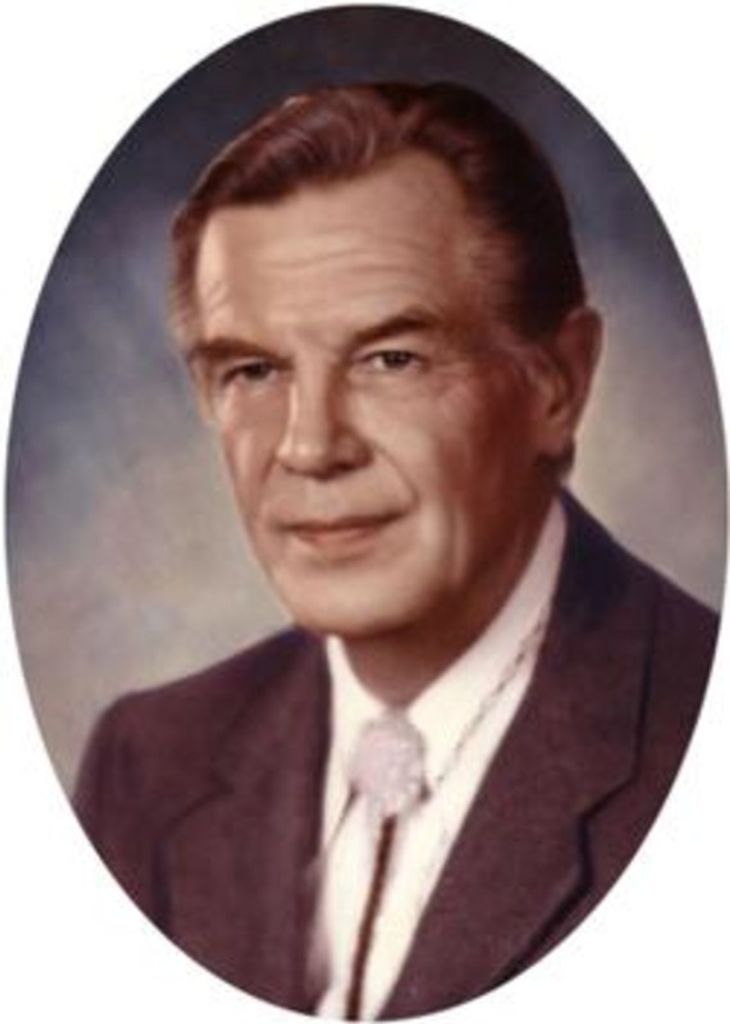
Giebink
Dec 4, 1916 — Jan 27, 2008
Robert Rodger Giebink's Obituary
Dr. Robert R. Giebink, age 91, passed away Sunday, January 27, 2008. Dr. Giebink, son of Henry and Jennie (Cambier) Giebink of Orange City, Iowa, was born December 4, 1916 in St. Petersburg, Florida where his parents wintered. After graduating from Orange City High School in 1934, Bob attended one year at the University of Iowa, pledging Alpha Tau Omega Fraternity. Following the death of his father, he returned to Orange City to attend Northwestern Junior College where he played on the baseball team, acted in operettas, sang in the choir, and was a member of an octet. Dr. Giebink later started an endowed scholarship, the Jennie Cambier Giebink Pre-Med Scholarship, named in honor of his mother, an 1898 graduate of Northwestern College. He then moved to Minneapolis where he studied during the summer and entered Law School at the University of Minnesota in the fall of 1936 with his older brother, Gil. While at the U of M Bob Giebink participated on the university golf team. After completing one year of law Dr. Giebink decided to study medicine. He completed one year of pre-med at the U of M before earning his M.D. at that University in 1942. Believing war was imminent, Dr. Giebink enlisted in the Army Reserves and was expected to complete his medical training before he could serve active duty. Bob married Mary Seitz of Minneapolis, a Tri-Delt at the University of Minnesota, on October 11, 1941. The couple honeymooned for 6 weeks in the American Southwest and the Mexican Riviera. Upon returning to Minneapolis they moved in with Mary's parents so Bob could finish medical school and complete his internship at Minneapolis General Hospital (now Hennepin County Hospital). Following activation in the U.S. Medical Corps and training in Pasadena, California, 1st Lt Giebink was shipped overseas to the European Theater in December, 1943, after a 10 day leave to attend the birth of his first child, Mary Janice, in Minneapolis. Dr. Giebink was initially assigned to the U.S. Military Hospital in Paris, but was transferred in the fall of 1944 to a medical battalion of the 120th infantry Regiment, 30th Infantry Division, U.S. Army when a battalion surgeon was killed in action. His division was one of the units rushed south to stem the German breakthrough during the Battle of the Bulge. While commanding his forward aid station, now Capt. Giebink received the Bronze Star in February 23 and a bronze Oak Leaf Cluster to be worn with the Bronze Star previously awarded, on March 24, 1945. The first medal was for his formulation of plans for handling casualties during the initial allied assault across the Roer River that saved the lives of many wounded men. The second was awarded for courage and leadership after leading his medical group across the Rhine River and through intense artillery and mortar fire to a town where he set up his aid station, thus assuring prompt medical treatment for the wounded infantrymen. Dr. Giebink was also awarded a Purple Heart for injuries incurred during battle. Upon receiving his discharge from the army in the fall of 1945, Dr. Giebink entered a 3-year residency program in orthopedics, serving at the Minneapolis VA Hospital and Minneapolis General Hospital for fractures and trauma, and Gillette Children's Hospital and the Shriner's Hospital for Children in St. Paul, both which specialized in surgery to correct children's disabilities, in many cases as a result of polio. Following his residency, Dr. Giebink was one of the 11 founding physicians who established the St. Louis Park Medical Center (now the Park Nicollet Clinic) in 1950. Three years later he and his now family of 6 came to Sioux Falls, and he set up a solo practice with his first offices located downtown. In 1962 he welcomed Dr. Phil Gross to his practice and Orthopedic Associates was formed. Dr. Giebink retired in the late 1980's after 40 years as a physician and building up a practice that included a number of orthopedic surgeons, many of whom are still in practice today. Because of his oldest daughter, Jan who is developmentally disabled, Bob Giebink saw the need for a program to provide training for her and others and, on her behalf and theirs, helped found the Sioux Vocational School for the Handicapped (now South Dakota Achieve) in the late 1950's. Sioux Voc began with 15 clients in a downtown location before moving to the old airbase. At that time it was only a sheltered workshop. As an incentive to bigger and better accomplishments for the clients, Dr. Giebink donated land for a permanent building for the school which opened in 1967 on S. Western Avenue. This organization now assists over 300 individuals, almost all of whom are capable of developing worthwhile skills and contributing to the community as either valuable employees in businesses in Sioux Falls or in the sheltered workshops which provide paid contract work for some of the clients. Services also include residential living, both independent and group facilities. In addition to serving on the board of directors, including two terms as chairman, Bob remained active in the organization by serving on the Foundation Board for many years. Dr. Giebink's community service work also included serving on the boards of Dakotabilities, which assists severely disabled individuals; VOA (formerly Turning Point/Threshold), an organization that at the time provided counseling, education and job-training programs for disadvantaged youths; and Glory House, a halfway home which serves federal and state prisoners. To help these and other programs get started Bob donated land in Sioux Falls, and as a result, Achieve, Dakotabilities, VOA, Glory House, the Juvenile Detention Center, Disabled American Veterans, Alcoholics Anonymous (Southside), and the Minnehaha Ice and Recreation Center (now Sioux Falls Ice and Rec) had facilities in a good location. He also donated land for the Jaycee Camp for the Handicapped that operated near Baltic for many years. His concern for the needs of persons with disabilities led Bob to serve seven years in the South Dakota State Legislature, first as a representative then a senator from Minnehaha County. He counted among his main legislative accomplishments the increased appropriations for educating the disabled and laws mandating the mainstreaming of these children into public schools. Dr. Giebink also introduced a medical education bill three years in a row, 1969, 1970, and 1971, until a full-fledged 4-year medical school finally became a reality. His intent was to keep medical students in South Dakota to finish their education and training in order to provide much needed physicians to rural areas in the state. Many of his contemporaries admitted he was ahead of them in his thinking. Since then Sioux Falls has become a major regional medical center. His commitment to provide more doctors for the state also led him to be involved in supporting USD scholarships for future health professionals. He also served on the clinical faculty of the USD School of Medicine as well as on the admittance committee, helping to select future doctors. Bob Giebink had been a lifetime member of Sertoma International since 1958 and enjoyed his informative lunches with the Noon Sertoma group. He was particularly proud of Sertoma Park and the Butterfly House. After retiring from medicine, Bob joined the Masons and Shriner's High Twelve, the organization he trained with and that still supports free medical care at the numerous Shrine Children's burn and orthopedic hospitals in the U.S. Bob Giebink and his wife Mary raised seven children, three of whom are physicians. The couple filled their lives with the children, dogs, horses, and all the wild beasts that thrived on the acreage where the family lived by the Sioux River (squirrels, foxes, turkeys, deer, groundhogs, ground squirrels, cardinals, eagles, hawks, and other wild birds). Bob fulfilled a lifelong dream to own a cabin at Lake Okoboji, Iowa where he had spent time as a young man swimming, boating, and dancing to Lawrence Welk. He taught his own children and often other children to swim and boat during idyllic summers at the lake. He enjoyed learning how to sail together with his children. It was not uncommon to see two or three Giebink sailboats in the races on any given weekend day. Never one to sit still, Bob remodeled every home he ever lived in. After 25 years of hammering and painting the Giebink cabin was brand new. Bob Giebink also had a great love of farms, which came from working his family's farms in North Dakota during the summer with his brother Gil when they were young men. He once said if he hadn't become a doctor he would have been a farmer. He was a man who loved to hunt and was a steward of the land. He was also uncomfortable with any public recognition and awards for the things he did. Bob Giebink, also known as Doc to many and Papa Doc to his grandchildren, will be missed by his family and every other person whose life he touched. He is survived by his seven children; Jan Giebink, Sioux Falls, Jim (Roxanne Johnson), Merritt Island, FL, Joan Giebink (Bob Meyer), Sioux Falls, Patti Giebink, Chamberlain, Bob, Watertown, Jeff (Maura), Sioux Falls, Brad (Mary Ann), Sioux Falls; 14 grandchildren, Sarah, Travis, Erin, Arianna, Skye, Nic, Zac, Chase, Regan, James, Alexa, Seth, Sam, Jake; and two great-grandchildren, Alaina, and Nolan; his brother Gil's widow, Scottie Giebink of Bozeman, MT and Vero Beach, FL, Mary's sister, Carole Williams of Minneapolis, MN, numerous nieces and nephews; and special friend, Flo Godschalk, Sioux Falls,. Bob was preceded in death by his wife, Mary, his brother, Gil Giebink, one grandson, Michael Giebink, son of Jim and Roxanne, his brother-in-law, Charles "Chuck" Williams, and two nephews, John Williams and Scott Giebink. There will be a family and public gathering from 6:00 - 8:00 pm Friday, February 1, 2008 at Miller Funeral Home, 13th & Main Avenue. A memorial service will be at 11:00 am, Saturday at First Baptist Church with a private burial at Hills of Rest Memorial Park. In lieu of flowers, the family requests memorials be directed to South Dakota Achieve or the Sertoma Butterfly House.
To send flowers or plant a memorial tree in memory, please visit our flower store.
Robert Rodger Giebink's Guestbook
Visits: 2
This site is protected by reCAPTCHA and the
Google Privacy Policy and Terms of Service apply.
Service map data © OpenStreetMap contributors