
Share Rollyn "Rolly" Habeger Samp's obituary with others.
Invite friends and family to read the obituary and add memories.
Stay updated
We'll notify you when service details or new memories are added.
You're now following this obituary
We'll email you when there are updates.
Select your format and elements to print

IN LOVING MEMORY OF Rollyn "Rolly" Habeger Samp
Rollyn "Rolly" Habeger
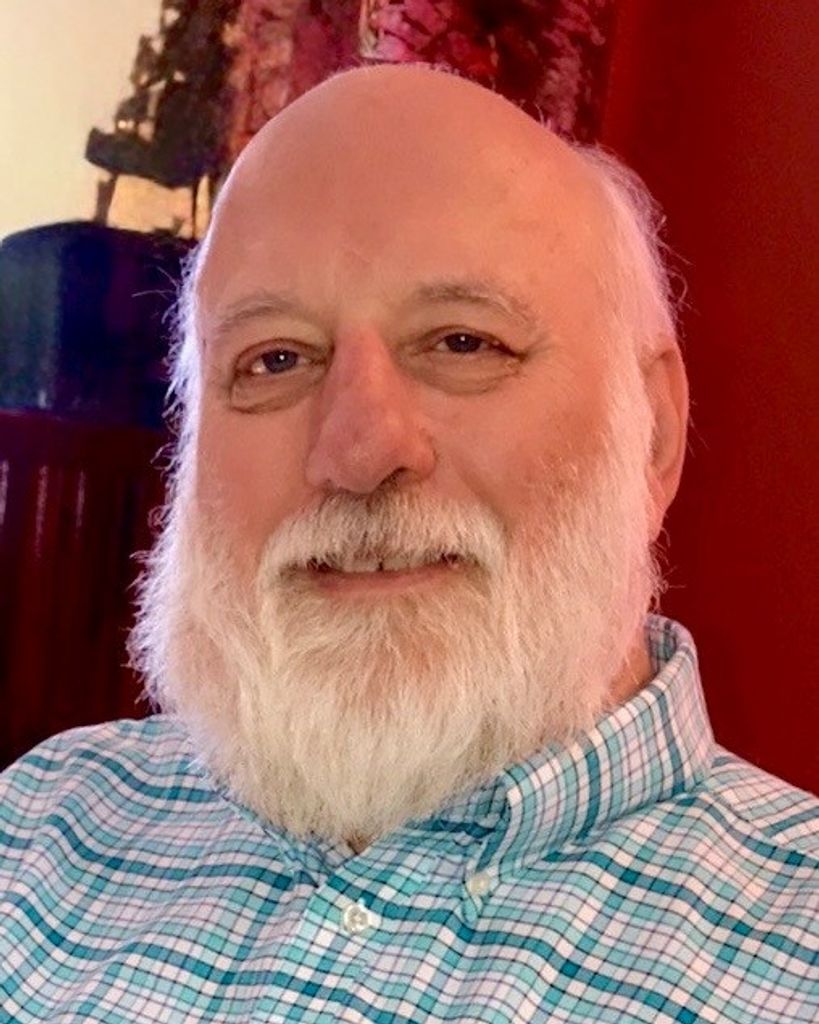
Samp
Sep 20, 1943 — Sep 1, 2026
Sioux Falls
Rollyn "Rolly" Habeger Samp's Obituary
Visitation with the family present will be from 4 to 7 pm on Monday, September 7, 2026, at St. Mark's Lutheran Church. A funeral service will be held at 10 am on Tuesday, September 8, 2026, at St. Mark's Lutheran Church. The church will be livestreaming the service on their Facebook page: facebook.com/stmarksluth
In lieu of flowers, the family requests that memorials be directed to the family to be distributed in Rolly's honor at a future date.
Rollyn Habeger Samp
September 20, 1943 – September 1, 2026
A South Dakota Original
Rollyn Habeger Samp, 82, of Sioux Falls, a South Dakota original whose life was built on family, faith in Christ, friendship, and the state he never stopped serving, passed into eternal rest on Tuesday, September 1, 2026, under the compassionate care of Dow Rummel Village Hospice in Sioux Falls, surrounded by family, after a short illness with cancer.
Rolly loved his wife, Karen, first, for whom his entire world revolved around. He loved his family. He loved the church. He loved his friends and his work. He also loved South Dakota with a loyalty that was not just sentimental, but also practical: he spent a lifetime fixing what was broken in it, writing what it needed, speaking for those who had no voice, and telling the truth when it wasn’t popular. Clients called him when they were in trouble. Neighbors called him when a law needed changing. Young people called him when they needed a roof and a second chance. He always answered the call.
Rolly was born September 20, 1943, in Chester, South Dakota, the nearest hospital to Wentworth, where his mother lived and his grandparents farmed, the son of Elden Burmester Samp and Ardyce Habeger Samp. His first years unfolded while his father served in the Pacific in World War II with a fleet band that played for troops. When his father came home at Christmas 1945, the family made a life in the small towns of eastern South Dakota. His mother wrote for the Argus Leader and kept a food column that ran in newspapers across the Upper Midwest. His father directed high school bands, including in Flandreau, the town Rolly always named as home. Flandreau formed him: a prairie town, a tribal nation next door, and a sense that a person was supposed to be useful.
He carried that expectation to Augustana College, where he met a young lady named Karen who he decided he’d marry the moment he met her. Augie is where he earned a degree in political science and communications, debated on a national champion college team, and received the Sen. Francis Case Leadership Award and the Sen. Robert Taft Award. He earned his Juris Doctor from the University of South Dakota School of Law in 1968 and was admitted to the South Dakota bar that same year. Fifty-eight years later, his peers still gave him the highest independent mark a lawyer can receive, the Martindale-Hubbell AV Preeminent rating. The rating measured skill and ethics. People who knew him measured something simpler. He was a true north of integrity in the public interest.
In June of 1964, in Bismarck, North Dakota, Rolly married that young lady he fell in love with, Karen Ann Moore. That same year the Argus Leader named them Newlywed Couple of the Year. They were dedicated to each other for 62 years. Together they raised seven children: Michael, Matthew, Rondina, John, Rebecca, Elizabeth and Susan, and he had a special bond with each of them. Together, Rolly and Karen also opened their home as foster parents to more than 70 young people over 18 years. They treated each person who entered 2609 as family. To this day, people who grew up in that house still call them Mom and Dad.
Faith was life. Rolly and Karen belonged to St. Mark’s Lutheran Church in Sioux Falls, where he served on the building committee for the church’s iconic pyramid sanctuary. He served as vice president and president of Hope Lutheran Church and as a delegate to the Dakota Crossroads Conference and the South Dakota ELCA State Convention. He sat on the Augustana College Fellows Cabinet. He founded the Fellowship of Christian Estate Planners and wrote Final Tithe: A Christian Approach to Estate Planning, a book that treated money as a matter of stewardship rather than mere accumulation. He liked to tell clients they could “run an estate from the grave.” It was a joke with a sermon inside it: take care of the people you love and do it on purpose.
When people really needed a lawyer, they often called Rolly Samp. He fought for families, farmers, and small-business owners, taking cases other lawyers wouldn't touch. He masterminded and negotiated the release of a baby held hostage by Pablo Escobar’s Medellín cartel. He served as co-counsel for a young woman wrongly accused of drug trafficking and helped win a verdict of innocence before Mexico’s Suprema Corte de Justicia de la Nación, the nation’s highest court. He represented entities in more than $8 billion in Wall Street financing and, over a career, served more than 5,000 families and 1,000 businesses. He was an old-fashioned lawyer who listened hard, thought harder, and did not confuse cleverness with character.
South Dakota law bears his handwriting in many ways. He’s credited with authoring the state’s economic development tax incentive, its original homeschool legislation, amendments to state administrative procedure, Rural Ambulance District laws, and local-option tax legislation. He helped organize the citizen effort that authorized and funded a four-year medical school for the state; you know that today as the University of South Dakota Medical School. In 1976, he worked to authorize funding for students at private colleges. He helped pass the state’s parochial and Christian school tuition law. In 1977, he was among the leaders who ended a 40-year ban on championship high school football playoffs. Later he served on the Governor’s Task Force on trust reform and co-authored a 1999 University of South Dakota Law Review article, “The Negligent Situs of Trusts.” The trust-law work that followed helped make South Dakota, in the judgment of Forbes, Fortune, The New York Times, The Wall Street Journal, and a long list of financial institutions, one of the best places in the country to keep your money. He did not do that work to make the state fashionable. He did it because he believed the law should protect people who built something and wanted it to last.
Government was never a spectator sport for him. As a young man, he spent six years heading the South Dakota field staff of U.S. Rep. Ben Reifel, the first Plains Native American elected to Congress. At 25, he was chief of staff to Governor Frank Farrar. His political consulting firm handled more than 770 campaigns and won 92 percent. He was South Dakota’s longest-serving Republican precinct committeeman, elected continuously since 1964. Governor William Janklow honored him with an Outstanding Citizen Award and had the back of the medal engraved: “You made me look good a lot of days.” Rolly liked the line because it was honest. He was not interested in looking good. He wanted to get the work done.
That same instinct shaped his work with Native nations. He served eight years as chief tribal judge for the Flandreau Santee Sioux Tribe and belonged to the Northern Plains Tribal Judges Association. He helped defeat a referendum that would have mandated state jurisdiction over Indian reservations and helped organize the United Sioux Tribes. In 1986, the United Sioux Tribes gave him their highest honor, a blessed peace pipe, in thanks for decades of service. The honor sat alongside the quieter work: showing up for families who needed him and treating tribal sovereignty as law and people with dignity.
He had a gift for standing in rooms that did not look like a prairie law office. For 19 years he was risk manager for NFL Super Bowls. He held the same post for Ford’s 100th anniversary celebration and for several NCAA Final Four tournaments. He produced “South Dakota Remembers,” the World War II golden-anniversary celebration at the State Fair in 1995 and later produced the 2001 unveiling of the state’s World War II Memorial on Capitol Lake. He served as secretary and director of the USS South Dakota Battleship Memorial and spent years helping preserve the legacy of the most decorated battleship of the Second World War.
For more than 25 years, he was president of SFEA, a nonprofit housing organization that served thousands of disadvantaged families, special-needs adults, and seniors in South Dakota, Iowa, and Nebraska. In 1985, he founded South Dakotans to Save Our Lakes and served as the group’s president from 1987 to 1991. He sat more than 40 years as a director of the Lake Madison Development Association and was volunteer editor of The Lake News, which he liked to call the world’s largest lake newspaper, for 38 years. He served as president of the Dakota Chapter of the Cystic Fibrosis Foundation and helped found cystic fibrosis clinics in the state. He coached youth basketball for 18 years and spent many years as a Cub Scout leader. In 1989, he received the Friend of 4-H Award and 4-H Humanitarian of the Year. In 1991, the South Dakota Hall of Fame presented him with a special achievement award. At the request of Mayor Mike Huether he served on the advisory committee that built the Midco Aquatic Center. He also served on the Minnehaha County Bicentennial Committee, the Siouxland Libraries board, the Minnehaha County Ambulance Study Committee, and as a delegate to the South Dakota Futures Convention.
He wrote the way he talked: in sentences meant to be used. He authored and coordinated The Governors of South Dakota. For over two decades, his weekly newspaper column, “What’s the Law?”, reached some 400,000 readers. His books include The Murdo Massacre and If You Like the ’50s, You’ll Love These Stories. He wrote for Communicating for Agriculture, Farm Forum, and Conservation Digest, and he was a special consultant to Dan Rather and CBS News for the 1987 television special “Farm Crisis.” During the farm crisis, he helped save over 1,500 family farms.
In 2023, Dakota State University awarded him an honorary Doctor of Public Service. Friends of the university have said the school itself would not exist today without the breakfast conversation in which Rolly persuaded Governor Janklow not to close it and then helped point it toward a future in technology. He received the degree and said he had spent his life with words but could not find one for how he felt. That was as close as he came to being speechless.
People who sat across from him remember the rest. He offered sage advice to clients and anyone else who asked, without asking for a thing. He had a quick wit that could cut a pompous argument down to size and then, moments later, put a worried person at ease. He lived a life of serving others in way big and small but never seeking credit.
He is survived by the love of his life, his dedicated wife of 62 years, Karen Ann (Moore) Samp; and by their seven adult children and their families: Michael (Julie) and their children Jacob (Madison), Margaret, and Peter; Matthew (Matheus); Rondina Fire and her daughter Christine Egert, John Fire and his daughter Laramie, Rebecca (Dr. Kevin) Vande Berg; Elizabeth (Joseph) Antonio and their daughter Scarlett; Susan (Young) Chau and their children Eric, Alison, April, and Annie.
He is also survived by his sister, Cynthia (Duane) Boesch; his nephews Anthony (Jennifer) and Daniel (Katie) and his niece April; his cousins Nancy (William) Lustfield, and their son Travis; Bruce (Pawn) Marek, Greg (Monica), and Gail (Jeff) Spars; his brother-in-law James Patrick (Sam) Moore, nieces Jennifer (Shane) Randolph, Christine (Michael) Layman and their many children and grandchildren; and by many other cousins, relatives, and members of his extended family, whom he cared for deeply and who often sought his counsel and advice.
He was preceded in death by his father, Elden Burmester Samp; his mother, Ardyce Habeger Samp; his brother, Timothy Elden Samp; his grandparents Jacob and Rosella Habeger and Albert and Veda Samp; and his great-aunts LaVonne Habeger (Ralph) Hass and Eileen Habeger (Dr. Jerry) Marek.
Rolly Samp was a Flandreau boy who became a Sioux Falls lawyer, a churchman, a foster father, a writer, a judge, a political mechanic, a lake editor, and a keeper of other people’s emergencies. He remained, to the end, a South Dakota original. The state is a better place because of Rolly. The people who loved him are better off today because he belonged to them.
Funeral Services for Rollyn "Rolly" Habeger Samp
Visitation

Monday
St. Mark's Lutheran Church
4:00 - 7:00 pm (Central time)
Funeral Service
Tuesday
St. Mark's Lutheran Church
Starts at 10:00 am (Central time)
Rollyn "Rolly" Habeger Samp's Guestbook

Visits: 6148
This site is protected by reCAPTCHA and the
Google Privacy Policy and Terms of Service apply.
Service map data © OpenStreetMap contributors